Compare plants.
COMMON CHOICESago palmCycas revoluta |
NATIVE ALTERNATIVECoontieZamia integrifolia |
|---|---|
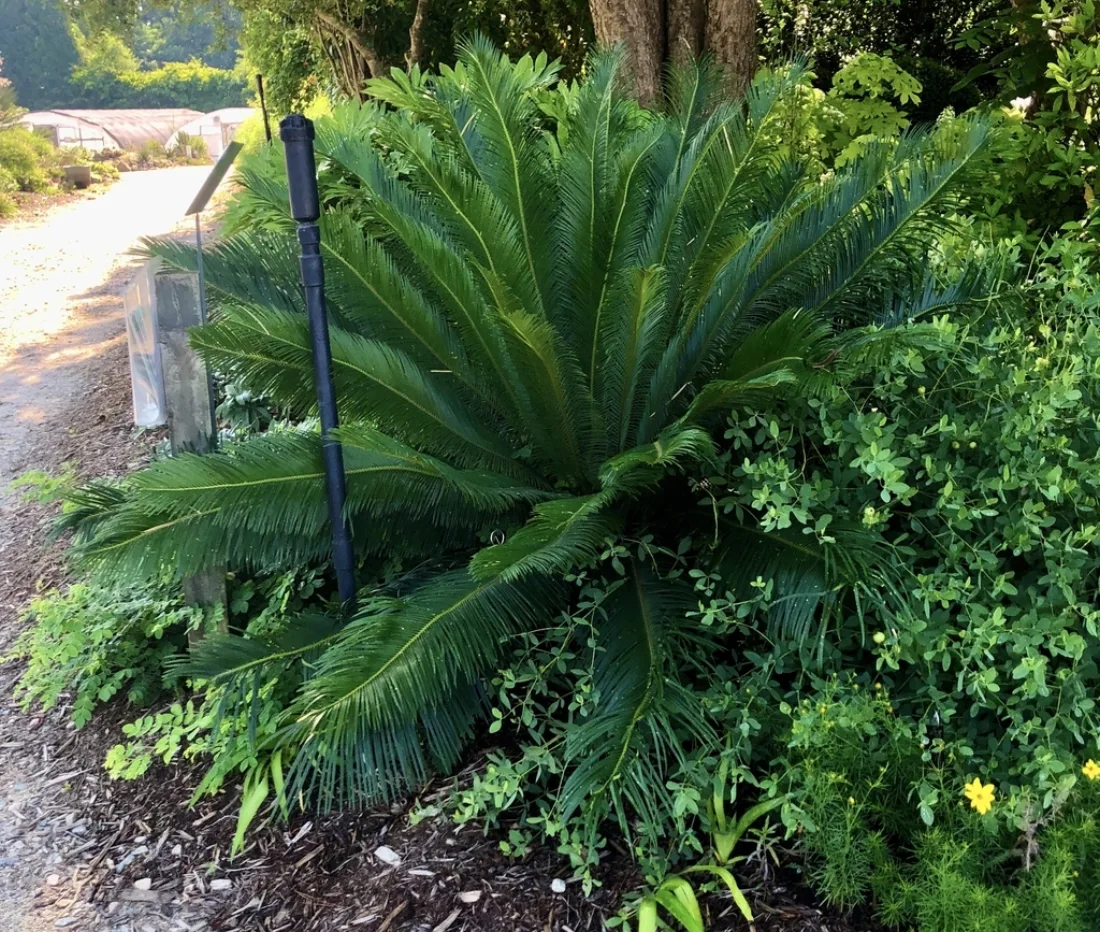 |
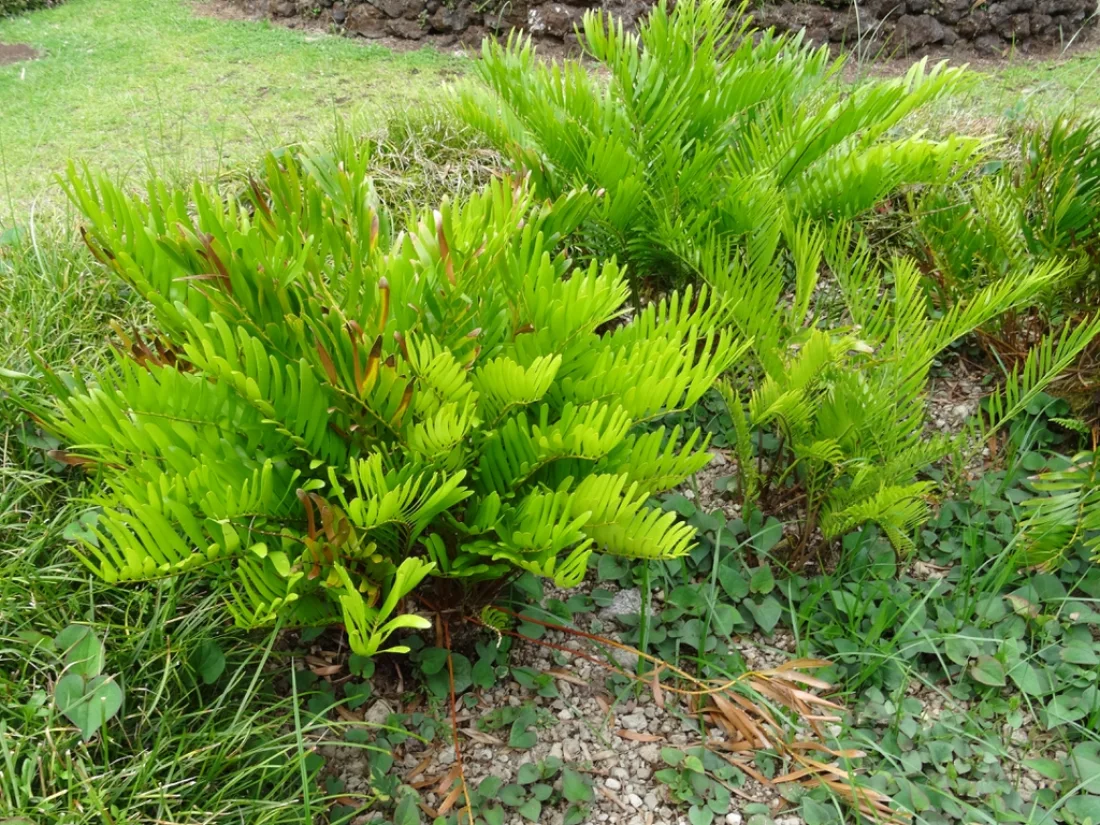 GO NATIVE |
| Native range | |
| Southern Japan | SE. Georgia to Florida, Bahamas, Cuba, Cayman Islands.See state guides |
| Sunlight | |
| Part shade | Part sun & shade |
| Soil moisture | |
| Moist, well-drained soil | Average moisture / Dry soil |
| Mature height | |
| 3–10 ft | 1–3 ft |
| Mature spread | |
| 3–10 ft | 3–5 ft |
| USDA hardiness zones | |
| 9–12 | 8–11 |
| Season of interest | |
| Evergreen foliage & cones | Seasonal foliage |
| Garden & wildlife value | |
| Pollinated by insects. | Native leaves feed atala butterfly and echo moth caterpillars. |
| Growing notes | |
| A very slow-growing cycad, despite its palm-like leaves. All parts are highly poisonous if eaten. | Use nursery-propagated plants in drained soil; caterpillar feeding is expected, and all parts are poisonous if eaten. |
| Growing information | Growing information Native range: Kew |
Sizes describe the species; individual cultivars can differ.